Someone lost this mitten while crossing the Lendbreen ice in the Viking Age. ❄️ They probably thought it was gone forever — but the ice preserved it for 1,100 years!
Made from several pieces of woven textile sewn together, this is the only known Viking Age mitten from Norway. Fragile clothing rarely survives, making finds like this truly special.
Even small items like gloves and hats tell us a lot about daily life in the past — and without the ice, this mitten would have decayed long ago.
This week, we have shared five ice finds that would not have survived without the ice. Hope you have enjoyed the series....
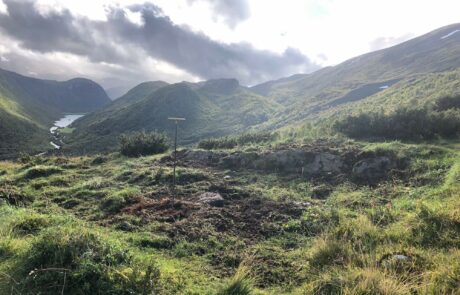
During the 2019 melt, a hiker spotted something on the ice in the Horse Ice Patch pass — a hide object that looked like a shoe.
We rushed to the site and recovered it before the snow returned. Radiocarbon dating shows it’s from around AD 300, the Iron Age.
What’s amazing? This shoe resembles Roman footwear! Someone crossed these icy passes 1,700 years ago wearing shoes inspired by distant Roman fashion 😮
Without the ice, this delicate hide would have decayed long ago, and we’d never have known about this glimpse of style and everyday life in the Iron Age.
This week, we’re sharing five ice finds that would not have survived without the ice. #glacialarchaeology #climatechange #globalwarming #climatechangeisreal...
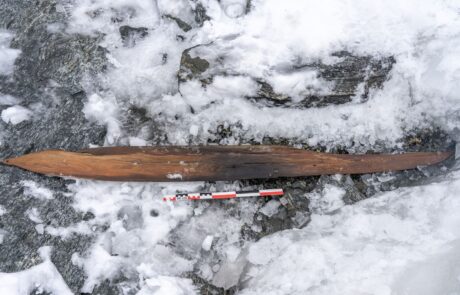
What looks like a simple stick is actually a 1,400-year-old toy arrow! At 26 cm long with a blunt tip, it would never have harmed anything — a child’s plaything lost in the snow.
It dates to AD 600, in the middle of the Late Antique Little Ice Age, when hunting became more important as local agriculture struggled. The child probably thought it was gone forever — but the ice preserved it, and we found it over a millennium later. 😍
This little arrow gives a touching glimpse into everyday life. Without the ice, it would have decayed long ago.
This week, we’re sharing five ice finds that would not have survived without the ice. #glacialarchaeology #climatechange #globalwarming #climatechangeisreal...
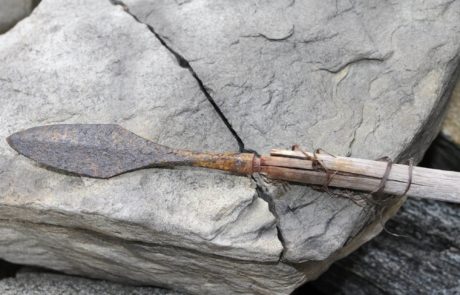
This arrow is incredible — the quartzite arrowhead is still in place, held by black pitch and fibres. At first glance, it may look like the stone was hollowed out for the shaft, but it is the black pitch you are seeing. The arrowhead itself is barely visible along the edges of the pitch.
The wooden shaft survives in three pieces, and the fletching is preserved — probably three feathers 😮 It dates to the Late Stone Age or Bronze Age.
Without the ice, only the stone arrowhead would have survived. Pitch, fibres, wood, and feathers — the details that show how it was made — would have been lost.
This week, we’re sharing five ice finds that would not have survived without the ice. #glacialarchaeology #climatechange #globalwarming #climatechangeisreal...